Discover how to dress a baby for bedtime with Ysabel Mora
Knowing what a baby should wear to sleep is one of those questions that tends to appear just when you most want some reassurance: at the end of the day, with your little one ready for bed, you may find yourself wondering whether they are comfortable, whether they will feel cold or whether they might wake because they are too warm. There is no single perfect sleep outfit for every night, but a few simple principles can help: consider the room temperature, choose soft and breathable fabrics, use appropriate layers and always prioritise safe sleep.
At Ysabel Mora, we like to think of baby sleepwear as clothing that supports rest rather than getting in the way. It should feel soft against the skin, be easy to put on and allow your baby to move comfortably during the night.
Why is it important to dress your baby appropriately for sleep?
During sleep, your baby needs to remain at a comfortable temperature. Too few layers may leave them uncomfortable, while too many can make them sweaty and unsettled. When considering what a baby should wear to bed, the aim is therefore not to add extra clothes “just in case”, but to find an appropriate balance.
The temperature of the room is a useful starting point. If the bedroom feels comfortably warm, your baby may need fewer layers than you expect. In a cooler room, add warmth gradually with lightweight layers rather than moving straight to very thick clothing.
If you are wondering how to keep a baby warm at night, think in terms of thin, functional layers that can be adjusted easily. Suitable baby clothing can also help reduce discomfort caused by rubbing, restrictive fits or too much warmth.
To check whether your baby is too hot or cold, do not rely only on their hands and feet. Instead, gently feel the back of their neck or upper back. If they feel sweaty, one layer may need to come off. If their torso feels cool, they may need a little more warmth.
What should a newborn wear to sleep?
During the first few months, choosing comfortable clothing becomes especially important. Newborn skin is delicate, so soft, breathable garments without irritating details are a practical choice.
If you are searching for what a newborn should wear to bed, these baby sleepwear essentials provide a useful starting point:
-
Cotton bodysuit or vest as a base layer: a useful essential for both mild and cooler nights. Choose short sleeves or long sleeves according to the season and bedroom temperature.

-
Soft sleepsuit or babygrow: an easy way to complete your baby's sleep outfit without restricting movement. Look for comfortable fabric and a fit that allows your baby to move freely.

-
Long-sleeve bodysuits: a particularly practical option when deciding how to dress a baby for sleep in winter or during cooler transitional months. They work as a soft base layer and can be combined with a sleepsuit according to the room temperature.

-
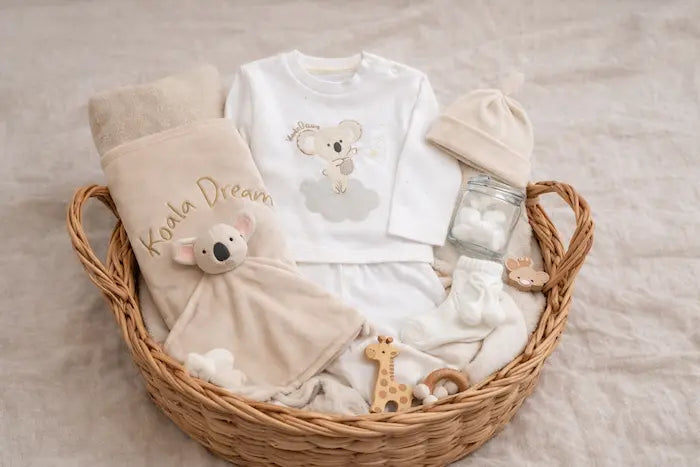
Newborn clothing sets: useful during the first few weeks when you are still learning how to dress a newborn for sleep. Sets containing easy-to-layer pieces can make it simpler to adjust your baby's clothing to the room temperature.

-
Baby blankets: useful for calm moments before bedtime, such as after a bath, during a feed or while holding your baby. For overnight sleep, follow safe-sleep guidance and remove loose blankets from the cot whenever appropriate.

During this stage, soft and breathable materials such as cotton are a practical choice, particularly for clothing worn directly against your baby's skin.
Practicality matters too. Easy fastenings, fabrics that cope well with frequent washing and designs that make night-time nappy changes simpler can make a noticeable difference.
You can also read our guide on how to wash newborn baby clothes.
How can you help your baby sleep safely and comfortably?
Safe sleep depends not only on what your baby is wearing but also on their sleeping environment.
- Avoid excessive layers and adjust clothing gradually.
- If additional warmth is needed, consider an appropriate baby sleeping bag rather than adding loose blankets.
- Choose correctly sized clothes that are comfortable and do not ride up or become tangled.
- Prioritise soft fabrics to reduce rubbing and irritation.
- If your baby is unwell, has a fever or you notice anything unusual, seek advice from a healthcare professional.
What should a baby wear to sleep in summer and winter?
Baby sleepwear naturally changes through the year. The basic principle remains the same: check the bedroom temperature and adjust the layers accordingly.
- In summer, on warm nights, a lightweight bodysuit or thin cotton sleepsuit may be enough.
- In winter, a long-sleeve bodysuit with a sleepsuit can provide a useful base. If more warmth is needed, an appropriate baby sleeping bag can be added.
For more detail, read our guide on how to dress a baby according to the temperature.
How to tell if your baby is too hot or too cold
Even when your baby's sleepwear appears suitable, a few signs can help you identify discomfort.
Signs your baby may be too warm:
- Sweating around the neck or damp hair.
- Very flushed cheeks.
- Restlessness or more frequent waking.
Signs your baby may be cold:
- A cool torso, particularly the chest or back.
- Frequent waking and difficulty settling again.
- General signs of discomfort while resting.
If you notice these signs, adjust one layer at a time and observe how your baby responds.
Baby sleepwear essentials from Ysabel Mora
A small collection of versatile basics can make the bedtime routine easier and help you adapt your baby's clothing throughout the year.
-
Cotton bodysuits: a practical base layer for different seasons.
-
Soft sleepsuits and babygrows: comfortable options designed to allow freedom of movement through the night.

-
Newborn clothing sets: useful for creating simple layers during the first few weeks.

The aim is not to own huge amounts of baby clothing, but to choose practical pieces you will use regularly, that wash well and feel comfortable against your baby's skin.
Dressing your baby for sleep becomes easier when you keep a few principles in mind: check the room temperature, choose breathable fabrics, adjust the layers and observe your baby's comfort. Explore Ysabel Mora baby bodysuits and sleepsuits and create a comfortable bedtime wardrobe from the first months.